


How to Choose Your First Pair of Ballroom Shoes
Why Your Everyday Shoes Won't Work
It is tempting to turn up to your first class in a pair of trainers, plimsolls or the smart shoes you wear to the office. Almost every dancer does it once. The trouble is that dance floors are built to let you pivot, and ordinary shoes are built to stop you.
A trainer grips the floor. That grip is brilliant for running and terrible for a waltz, because when your foot sticks and your body keeps turning, the strain travels straight up into your knee. Smooth soles are worse in a different way — leather office soles slide unpredictably, and you spend the whole lesson worrying about falling over rather than thinking about your frame.
Dance shoes solve both problems at once. A suede sole gives you just enough slide to turn cleanly and just enough grip to push off with confidence. That single difference is why most beginners report that their balance improves within one lesson of changing shoes.
The Three Things That Matter Most
Ignore the colour, the sparkle and the brand name for now. Your first pair needs to get three things right.
- A secure strap. Whether it is a closed court shoe with a buckle across the instep or a Latin sandal with an ankle strap, the shoe should hold your foot firmly. If your heel lifts out of the shoe when you walk, your foot will claw to keep it on, and your whole leg will tighten up.
- A flexible sole. Bend the shoe in your hands. It should flex at the ball of the foot, where your foot actually bends. A stiff sole stops you from feeling the floor and makes rising onto the ball of your foot feel like hard work.
- A proper fit. This is the one people get wrong most often, usually because they buy online in a hurry.
Getting the Fit Right
Dance shoes are not supposed to fit like everyday shoes. They should feel snug — almost too snug at first — because the suede sole and the soft upper will give slightly with use. But snug is not the same as tight.
Here is what to check:
- Shop in the afternoon or evening. Feet swell during the day, and a shoe that fits at 9am can be unbearable by 8pm.
- Leave a few millimetres at the toe. Your toes should not press against the front of a closed shoe, particularly on a heeled style where your weight slides forward.
- Try them on the way you will dance. Bring the tights, socks or sheer pop-socks you plan to wear. Bare feet in a shoe you will always wear with tights is a wasted fitting.
- Ask about width fittings. Many brands offer narrow, standard and wide. A wider fitting in a shorter length often solves the "my toes are cramped but the heel slips" problem.
- Walk, don't just stand. Take a few steps, rise onto the balls of your feet, and turn gently on the spot. If you can feel the shoe moving independently of your foot, size down or try a different style.
Which Style for Which Dance
The type of shoe you need depends on what you are learning, and it is fine to start with something versatile.
- Ballroom (waltz, foxtrot, quickstep, tango): a closed-toe court shoe with a two to two-and-a-half inch heel is the classic beginner choice. The closed toe protects your feet when you are still learning where they are.
- Latin (cha cha, rumba, jive, samba): a sandal with a flexible sole and open toe lets you point and articulate the foot. Straps matter enormously here — a floppy Latin sandal is worse than useless.
- Social and modern jive: many social dancers live in practice shoes, which are lower, wider and cushioned. They look less glamorous and feel wonderful after two hours on a hard floor.
- Men: a lace-up or slip-on with a one-inch Cuban heel suits ballroom, while a softer Latin shoe with a slightly higher heel allows the same foot articulation the ladies' sandals provide.
If you are dancing both disciplines, buy one pair for whichever style you attend most often rather than compromising on a shoe that does neither job well.
Breaking Them In and Looking After Them
New dance shoes should be introduced gradually. Wear them for twenty minutes at home, then for half a lesson, then for a full one. A little stiffness in the first week is normal; rubbing, pinching or numbness is not.
Never wear them outside. Suede soles pick up grit from pavements, and once the nap is clogged they lose their slide. Keep a suede brush in your dance bag and give the soles a quick scrub every few weeks. Heel protectors — the little plastic cups that push over the heel tip — cost very little and save you from re-heeling a shoe after a season of socials.
Finally, if your feet ache after class, that is information, not weakness. Note where it hurts. Pressure across the instep means the strap is too tight; burning under the ball of the foot suggests the heel is too high for now; a slipping heel means the length is wrong. Take the shoes back to the shop and tell them — a good fitter will adjust or exchange, and your second pair will be far easier than your first.


Ballroom
-
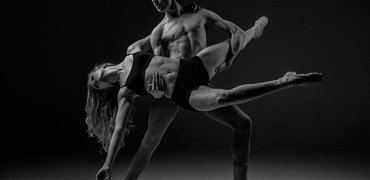
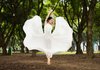
The waltz rises and falls with a gentle three-four rhythm. Counting one-two-three helps beginners move smoothly around the floor without rushing.
Beginners


-

Long established fact that a reader will be distracted
-

Long established fact that a reader will be distracted
-

Long established fact that a reader will be distracted


Latin
Karla Gleichauf
12 May 2017 at 05:28 pm
On the other hand, we denounce with righteous indignation and dislike men who are so beguiled and demoralized by the charms of pleasure of the moment
M Shyamalan
12 May 2017 at 05:28 pm
On the other hand, we denounce with righteous indignation and dislike men who are so beguiled and demoralized by the charms of pleasure of the moment
Liz Montano
12 May 2017 at 05:28 pm
On the other hand, we denounce with righteous indignation and dislike men who are so beguiled and demoralized by the charms of pleasure of the moment