

Why Posture Matters in Ballroom and Latin Dance
Why Posture Is the Foundation of Every Figure
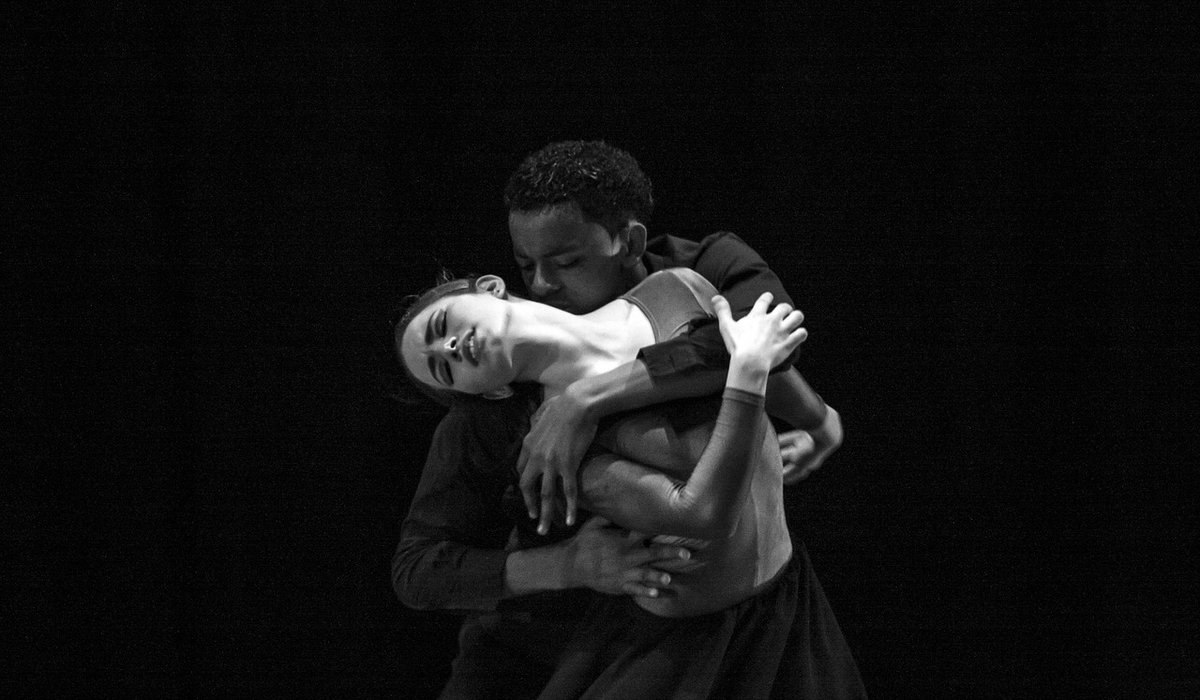
Ask a room full of dancers what they would most like to improve and you will hear plenty about footwork, spins and styling. Ask their teachers and you will usually hear a different answer: posture. Posture is not a decorative extra you add once the steps are learned. It is the structure that makes the steps possible in the first place.
When your spine is stacked efficiently, your weight sits over your feet and your balance becomes far less effortful. Your frame stops collapsing whenever you are moved or stretched, and your partner feels a clear, reliable connection instead of a wobbly one. Visually, a tall, well-held line makes even simple figures look elegant, whilst a slumped one can make advanced choreography look muddled. In short, posture affects how you feel, how you lead or follow, and how you look — all at once.
What Good Posture Actually Looks Like
Good posture is not stiff, military-style rigidity. It is a lengthened, balanced and above all available body. In practice, that means:
- Head: sitting directly above the spine, chin level, with the crown of the head reaching gently upwards. Not pushed forward or tipped back.
- Shoulders: wide and relaxed, sitting broadly across the back rather than lifted towards the ears.
- Ribcage: lifted but not thrust forward, with the ribs resting over the pelvis.
- Pelvis: neutral — neither tucked under nor tipped back with the tailbone pushed out.
- Knees: softly released, never locked, so your legs can act as shock absorbers.
Notice that none of this requires force. If you are gripping your thighs, clenching your seat or holding your breath, you have moved past good posture into tension, and your dancing will suffer for it.
The Difference Between Ballroom and Latin Posture
Both styles share the same basic stacking, but the emphasis shifts. In Ballroom, you are creating a tall, stretched, upward line. The ribcage lifts, the spine lengthens, the head turns and extends to the left, and the connection through the frame is broad and expansive. Think of growing taller from the waist upwards whilst the legs stay grounded and driving.
Latin posture is often misunderstood as being loose or casual. In fact, the spine stays long and tall, but the weight travels further forward over the balls of the feet, the knees are more released, and the hips are free to move because the ribcage and pelvis are not locked together. The result is a posture that looks rhythmic and alive rather than rigid. If you try to dance Cha Cha or Jive with Ballroom's fixed, lifted ribcage, you will feel restricted — and your hip action will disappear.
The Wall Check: Two Minutes That Change Everything
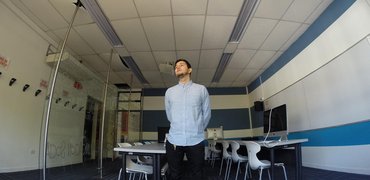
The simplest posture tool in existence is a plain wall, and it costs nothing. Use it before class, after a long day at a desk, or any time your frame feels heavy.
- Stand with your back to the wall, feet about hip-width apart and roughly a hand's length away from it.
- Bring your heels, buttocks, shoulder blades and the back of your head lightly into contact with the wall — without forcing your chin up or arching your lower back.
- Breathe normally and notice where you lose contact. The lower back usually arches; the head usually drifts forward.
- Gently lengthen through the spine, keeping the ribs soft, and hold for five slow breaths.
- Step away, keeping that same sensation of length, and walk a few steps. That is the feeling you want on the floor.
Repeat this daily for a fortnight and you will notice the difference in your frame long before your teacher mentions it. It is also worth checking yourself in the corner of the practice room, where two mirrors meet, as this reveals whether your head and hips are truly stacked.
Common Posture Faults and How to Fix Them
Most posture problems fall into a handful of familiar patterns, and each has a practical correction:
- Chin jutting forward or tipping back. Think of the head floating up and slightly back, with the eyes level. Check it in a mirror from the side.
- Collapsed ribcage. Imagine the ribs resting lightly on top of the hips. Breathe into the sides of the ribcage rather than the chest.
- Shoulders creeping up. Roll them back and down, then let them widen. Shrug them deliberately, then release, to feel the difference.
- Locked knees. Keep a small, soft bend so your weight can travel without jarring. Locked knees usually mean your weight has drifted backwards.
- Hips pushed forward, lower back gripped. Lengthen the tailbone downwards and soften the front of the hips. Gripping here blocks Latin hip action and makes Ballroom turns sluggish.
Making Posture a Habit, Not a Correction
Posture improves fastest when you stop treating it as something you fix and start treating it as something you rehearse. Two or three short wall checks a day will do more than one long session each week. Add a minute of gentle spine lengthening and shoulder releases to your warm-up, and practise holding your frame for a full slow track without letting it drop on the easier figures — that is where posture usually slips.
Ask your partner or teacher to tell you the moment your ribs collapse or your chin lifts, and welcome the feedback rather than defending against it. Away from the studio, notice how you sit at your desk, in the car and on the sofa; the body you bring to class is the body you will dance with. With a little daily attention, good posture stops being a conscious effort and becomes simply how you stand, walk and dance.


Ballroom
-
You do not need a large studio to improve at home. Clear a safe area, use a mirror and focus on small, consistent movements.
Beginners



-

Long established fact that a reader will be distracted
-

Long established fact that a reader will be distracted
-

Long established fact that a reader will be distracted



Latin
Karla Gleichauf
12 May 2017 at 05:28 pm
On the other hand, we denounce with righteous indignation and dislike men who are so beguiled and demoralized by the charms of pleasure of the moment
M Shyamalan
12 May 2017 at 05:28 pm
On the other hand, we denounce with righteous indignation and dislike men who are so beguiled and demoralized by the charms of pleasure of the moment
Liz Montano
12 May 2017 at 05:28 pm
On the other hand, we denounce with righteous indignation and dislike men who are so beguiled and demoralized by the charms of pleasure of the moment